


Date

January 13–16, 2018

Location

San Diego, CA

Speakers

34 Industry Experts

COLOR 18 / What You Missed

Whether you’re a creative, brand professional, production specialist, or a color management expert, there will be sessions that are well matched for you at this year’s conference. Color 2018 is where you’ll find the most practical and in-depth information from the best minds in color—and gain knowledge that will strengthen your competitive edge.

Managing color crosses many organizational lines—from design to brand management to production. The objective is to maintain brand integrity across product lines while using diverse production processes. There is no better event to learn everything there is to know about doing color right—and making this happen—than the 2018 Color Conference, hosted by Printing Industries of America and SGIA!

Click here to flip through an interactive version of the 2018 Color Conference brochure.

Register
Alt

Alt image

2018 Conference Schedule / What You Missed

Kyle Randels

Introduction to Lean

Process & Tools—Fundamental – A Lean organization understands customer value and focuses key processes to continually meet those needs with the least amount of resources. In this workshop, attendees will receive foundational knowledge of Lean manufacturing concepts and tools. The training combines a classroom setting with hands-on simulation. The simulation gives participants the opportunity to manufacture products in a simulated factory and see the benefits of Lean manufacturing firsthand. Participants will learn value-added vs. non-value-added activities, the eight wastes, about one-piece flow, Kanbans, point-of-use storage, quality at the source, batch reduction, teams, standardized work, workplace organization, and visual controls. Each concept will build an individual’s ability to identify and eliminate manufacturing waste.

John Compton

Standard Work: What It Is, How to Create It, How to Improve It

Taiichi Ohno said it best: “Without standards, there can be no improvement.” Standard work is one of the foundation disciplines of lean and continuous improvement. It is the key to maintaining stability, reducing variation, solving problems and improving work processes. In this workshop participants will learn the principles and practices of creating standard work on the shop floor and how to use it as a basis for problem solving and improvement. Attendees will participate in a work activity simulation in which the application of standard work practices will be seen and experienced. Various types of standard work practices will be presented and related to various production conditions. Several examples will be discussed including those where production is consistent and uniform as well as where there is great variation in both type and quantity of work produced. The creation and use of visual work standards will be examined.
Jamie Parker

Leadership Skills for Engaging Employees in CI

Leadership and Culture – Do you lead your employees in a way that engages them in continuous improvement (CI)? If you’re not sure, sign up for this interactive workshop. Taught by an accomplished speaker and consultant with plenty of hands-on managerial experience, Jamie explains how to bring Respect for People to life in a way that engages the frontline staff so CI thrives. She’ll show you how to get your frontline team to change old, unhelpful behaviors and adopt new behaviors that are needed to fuel your CI transformation. You’ll learn and practice the art of asking good coaching questions that help people become competent problem solvers.
George Trachilis

The Harada Method: The People Side of Lean

George Trachilis shares his personal and professional journey to becoming a global Lean coach and leader. You will learn about his commitment towards building people to their fullest potential. George offers his insight into overcoming leadership and organizational challenges by building a culture of continuous improvement. He challenges attendees to think deeply about what *one* thing they are striving to achieve, and to remember that the driving force for any improvement effort must be aligned to a True North focused on adding value to the customer. He also shares the five steps of the lean leadership development model discovered by Jeffrey K. Liker. One of those five steps is committing to self development. George shares how the Harada method discovered by Norman Bodek (1932-2020) is the best system in the world for day-to-day management. Shohei Ohtani (a.k.a. Showtime) used the Harada method as a sophomore in Japan, he is now the best baseball player in the world.
Misael Cabrera

Leading a Lean Transformation In an Inhospitable Environment

Many leaders seek a process for rapid improvements, ignoring the transitory nature of such an effort. Some simply want to have "checked the box" that they have "done Lean" and move on. Rarely does a senior leader truly understand the full potential impact of a Lean management system and methodically pursues its adoption, especially in a government agency. The next time you wonder if it’s possible to transform your business and reap significantly higher performance, remember this presentation.
Shane Yount

Process-Based Leadership

Top performing companies devote enormous energy to three vital components: goals, people, and systems. Learn how to build and use non-negotiable processes to fully realize the potential of your workforce. These processes help to create a teamwork-driven culture of clear business focus, a sustained sense of urgency, and stronger team accountability. By utilizing Process Based Leadership®, attendees will be able to reinvent and sustain a successful culture.
George Trachilis

Developing Lean Leaders at All Levels: A Practical Guide

George Trachilis shares his learnings from coaching and developing executives in a remote setting. You will learn about what a good lean coach must know. You will also learn about the core values each lean leader must have. He shares key learnings from his trips to Japan with global leaders such as Karl Wadensten, Paul Akers, Norman Bodek (1932-2020) and others. George hosted two leadership summits in Santorini Greece where he invited Ritsuo Shingo, the son of Shigeo Shingo. George deconstructs his amazing learnings from a Gemba walk of a wine factory. He challenges attendees to think about applying these lessons in their day-to-day business. The one key skill that every lean leader must master is the ability to go and watch at the Gemba. George shares exactly what that means and how to deconstruct this activity for any business.
Ryan Feuquay

Internal Auditing as a CI Activity

Determining and documenting best work practices is hard work, sustaining and improving them is harder still. Which is why World Arts, a 50-person printing and fulfillment company in Spencer, Indiana, adopted an auditing approach it spotted in the medical device industry. An auditing team of individuals from different departments checks each major process to make sure that improvements are being captured and established practices followed. Find out how and why it works.
Greg Wright

Recovering from a Ransomware Attack with a CI Mindset

Imagine that ransomware has gotten into your computer system, encrypted files, and left ransom notes. You tell the criminals to pound salt, do your best to minimize impact on customers, and begin the painful recovery. That’s what Wright Global Graphics faced, and without a CI mindset 200 employees might have been out of work. Listen to the remarkable account of how Wright rebounded, the lessons it learned, and how the affair strengthened its commitment to continuous improvement.
Vic Nanda

Define the Right Metrics Aligned with Goals & Objectives

n this session you will learn how to step through a structured approach for identifying the right set of "balanced metrics" (lagging and leading) that are aligned to the strategic objectives of an organization. The approach is based on the best in class "GQM" Goal-Question-Metric approach to metrics identification by starting with the strategic Goals and Objectives of an organization driven from the VoC (voice of the customer) and VoB (voice of the business), and drilling down to key questions (drivers). At the final step, the drivers are drilled down to balanced metrics – lagging & leading.
Kyle Randels

Visual Management: Making the Abnormal Obvious

Visual management is about embedding critical information into the physical landscape of work so employees can tell everything simply by looking. It’s essential for Lean companies; in fact, there’s no workplace that visual management cannot make smarter, safer, faster, and more exact. A 30-year continuous improvement veteran will explain the basic definitions, principles, concepts, and tools that are at the foundation of a visual workplace and should be part of your improvement strategy.
Jamie Kemnitz

Using TWI for Training and Retention

Training Within Industry was initially introduced during World War II to meet the high demand for wartime materials from a smaller and less-experienced workforce. It has continued to be used, and compliments Lean, because of its methodology that empowers the frontline. Our industry’s current situation with short staffing and inexperienced workers was the motivator for Worzalla, a major book manufacturer, to base its Worzalla Training System on TWI. The company reveals the structure of its new training system and why it has made a big difference.
Steve Carter

5S in a Digital World: File Management

Printers constantly suffer wasted time and materials. The 5S methodology is a structured approach to eliminating waste, becoming organized, quickly spotting abnormal conditions, and setting new standards. Even though mostly used in physical work areas, 5S can pay dividends anywhere, include in the digital sphere. Applying 5S to file management results in less time looking for files, potentially using the wrong file, losing files, creates an organizational system anyone can understand, and greatly reducing the potential of producing errors. Come learn about 5S and its application in an uncommon area.

The Paper Chase: Strategies and Countermeasures for Navigating the Substrate Shortage

The shortage and surging prices of paper, film, and other substrates is an existential threat to printing companies. And especially for fine paper, increased production capacity isn’t coming to the rescue soon. Our panel will examine a multitude of ways that companies can alter buying and operating practices to limit the impacts and losses to their business. Panelists include Bob Anderson (Prismagraphic), Dave Geier (American Packaging Corporation), Cassandra Groenewold (Japs-Olson Company), and Jim Tomblinson (Modern Litho).
Stuart MacDonald

The Magic of Lean and CI

Stuart MacDonald has a refreshing look at how to approach continuous improvement. He explains how he stumbled into the Lean culture at his former employer (a fortune 200 company). It trained their employees with mandatory classes that were incredibly immersive. This led Stuart to rethink his hobby, performing magic. He proposed a question to himself, “how can I apply Lean and CI to my magic and how far will that take me?” It took him pretty far. He went from a part-time, local magician to successfully competing on the Penn and Teller Fool Us TV show, representing the U.S. at the World Championships of Magic, winning the North American Championships of Magic, and quitting his job to go on a world tour. Stuart guides the audience through a journey of discovery, failure and amazing success. He’ll also amaze attendees by performing the magic that fooled Penn & Teller.
JC Wilkinson

Our Quest for Operational Excellence

Seeking excellence takes passion, new leadership approaches, a model to follow, and perseverance. That is precisely what is going on at Vivid Impact, a graphic communications company in Louisville, Kentucky with more than 150 team members. This is your chance to hear how a company has created an operational approach that puts it at the forefront of print manufacturers.
Jeff Ellington

No Room for Error: Our Lean and Bottom Up Strategy

Ensuring that the American voting process can be trusted is a big responsibility for Runbeck Election Services, which prints ballots and facilitates elections around the country. Any mistake brings glaring attention, such as one in 2014 that caused the company to reinvent itself. Culture, leadership, and Lean processes are now the foundations of the company. From the concept of “hansei” to fostering trust throughout the organization, the company has many aspects worth emulating.
Merl Miller

Embedding Ergonomics into Lean Manufacturing

Ergonomics and Lean manufacturing have different goals but complement each other. Improving performance by eliminating the risk of employee discomfort and injury should be considered whenever using Lean concepts to improve processes. Learn how to think like an ergonomics professional by identifying risk factors and investigating and developing solutions to minimize them. With a new ergonomic sensitivity, you’ll ensure that job instructions and procedures are developed with safety in mind.
Thomas Hollmann

Improving Customer Experience

Are you looking to identify and capture productivity and customer experience improvements, as well as embed a customer focus into the fabric of your organization? This session will provide you with tools to do that, including service blueprinting and a proven method to close troubling service gaps. Use a CI mindset to address the service-related reasons why customers opt to take their business elsewhere.
Bridget Freidel

Conducting Kaizen Events for Rapid Improvement

Kaizen events are short-term events in which a facilitator guides a team to improve an existing process. Organizations like Thomson Reuters Core Publishing Solutions will conduct these events regularly, since a good kaizen event can have significant impacts on efficiency, quality, safety, and shorter lead time. They require careful planning and skilled facilitation, however. This large book manufacturer describes how it chooses, organizes, and conducts its events incorporating the DMAIC strategy.
John Compton

Work and Waste: The Power of Observation

The goal of Lean thinking companies is to maximize customer value while minimizing the resources needed to do so. To accomplish this, the non-value creating activities and conditions must be identified and eliminated. This session focuses on learning to see the waste in any work activity. Examples of waste in printing companies will be shown and discussed, along with techniques for observing work activities and a hands-on demonstration. Strategies for minimizing wasteful activities will be offered.

CI Café

Join us for this fascinating interactive discussion of specific printing company scenarios. You’ll be on three different teams during the hour, discussing realistic company dilemmas.

Takeaway Exchange

An interactive exchange of take-home ideas that pairs you with various attendees over an insight-filled hour.
Dave Macfarlane

Our Transformation: From 5S to Gemba Walks

The IC Group, a provider of print and marketing solutions, has been harnessing the power of continuous improvement and technical innovation to reduce waste, meet stringent service requirements, and focus on customer-defined value. Many Lean tools are in use, and the latest to be introduced—daily Gemba walks—have proven effective in improving team communications and solving problems before they snowball and impact customers. Hear about the progress and challenges as IC Group continues its Lean journey through the pandemic.
Katie Anderson

Break the Telling Habit

It’s easy to believe that to be a great leader you have to be the expert in the room with all the answers. But what if that belief was not true? Many managers are good at solving problems. The problem is that they solve problems for others rather than developing the capability of team members to solve their own problems, and burdens the manager with the ownership of all the problems. Leaders need to learn to break their telling habit in order to solve more problems and engage their people. Doing so requires asking questions from a place of curiosity to learn what a team member is thinking, not to lead them to your answer. Leaders also need to be aware of the words they use and how they could be received. Discover practices that can change your behavior to encourage critical thinking skills in others, solve more problems, and amplify your impact.
Wendi Breuer

Purposeful Culture for High Performance

Despite a desire for high performance, few organizations in our industry excel at fostering the culture required to achieve it. Communication may not be open and consistent, corporate values and goals unclear, team spirit lacking, individuals not empowered to make decisions, and systematic training and development ignored. Learn how to avoid those pitfalls by hearing SeaChange’s story. The commercial printing company has been passionate about taking purposeful steps to create a culture that has allowed it to be recognized as one of the best workplaces, but also to grow at an impressive rate and stay at the forefront of print and emerging technologies.

Runbeck Election Services

Runbeck Election Services, located in Phoenix, AZ, is a leading election ballot and solutions provider, whose innovative approach to the election process reaches more than 70 million voters in jurisdictions around the country. Over the last five decades they have developed cutting-edge equipment, software, and production methods to deliver the latest technologies and most secure elections that provide peace-of mind to their partners and preserve the integrity of the American democratic process. They have adopted the concepts and methodologies of Lean Manufacturing and Continuous Improvement, which are well on display, and will serve as an excellent example of what can be accomplished with Lean/CI. This will be a tour you won’t want to miss!

The tour will take place at the conclusion of the Wednesday morning Keynote session, from 12:00PM to 1:30PM (with bus departing at 11:30AM).

2018 Premier Partners

2018 Principal Partners

Want to become a sponsor?

There’s no other conference like this in the world, and you should be here! Learn all about the benefits of becoming a Color Conference sponsor.

2018 Event Speakers / Meet the Conference Presenters

George Trachilis

Global Leadership Institute

Stuart MacDonald

Award-Winning Magician

Dave Macfarlane

President, IC Group

Katie Anderson

Katie Anderson Consulting

Wendi Breuer

SeaChange

2019 Event Location

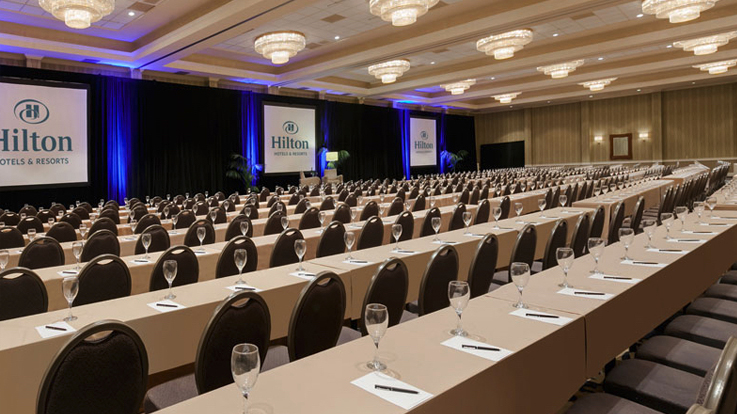
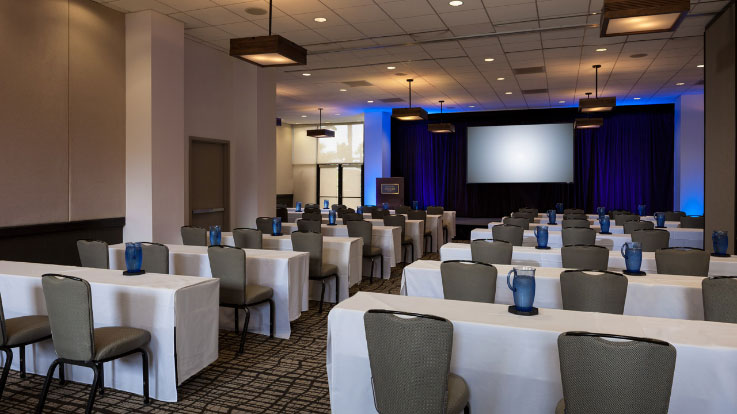
Hilton San Diego Resort & Spa
1775 East Mission Bay Drive
San Diego, CA 92109
Phone: (619) 276-4010

Hotel Reservations / Hilton San Diego Resort and Spa

Hotel reservation information with special Printing Industries of America Color Conference rates will be posted soon.

Check back later for 2019 Color Conference updates and more details about our new hotel conference location in sunny San Diego!

Alt

Alt image

Registration

PIA Members Full Conference Package

$995


$995 for PIA Members
$1195 for Non-members
Includes Free Pre-Conference Workshop!

SGIA & FTA Conference Package

$995

Includes Free Pre-Conference Workshop!

Promo code required
Need promo code?
FTA: Call 613-737-6020 ext. 111
SGIA: Call 703-385-1335

Special! Three or More Group Discount

$795

$795 for Members
$995 for Non-members
Save $200 on Each Registration!

Student and Educator Discount

$350

For Students and Instructors Only
Full Conference!
Additional Discounts Do Not Apply

Cancellation Policy:

Cancellations must be received in writing on or before Thursday, December 27, 2017 and will be assessed a $175 processing fee. Cancellation requests after Thursday, December 27, 2017, cannot be granted, but substitutions are welcome. No-shows will not be refunded.

Contact Us